

Industries · Development finance
Development Finance Institutions
Real-time, predictive intelligence that reduces allocation risk across a multi-country Africa portfolio.
- 18%
- of African government revenues now go to external debt service, double the 9% of 2017 — interest outbids health or education in four of five countries
- -42%
- the 2025 cut to humanitarian aid to the region, with bilateral aid down 16 to 28%. The cheapest capital layer is being withdrawn
- 15
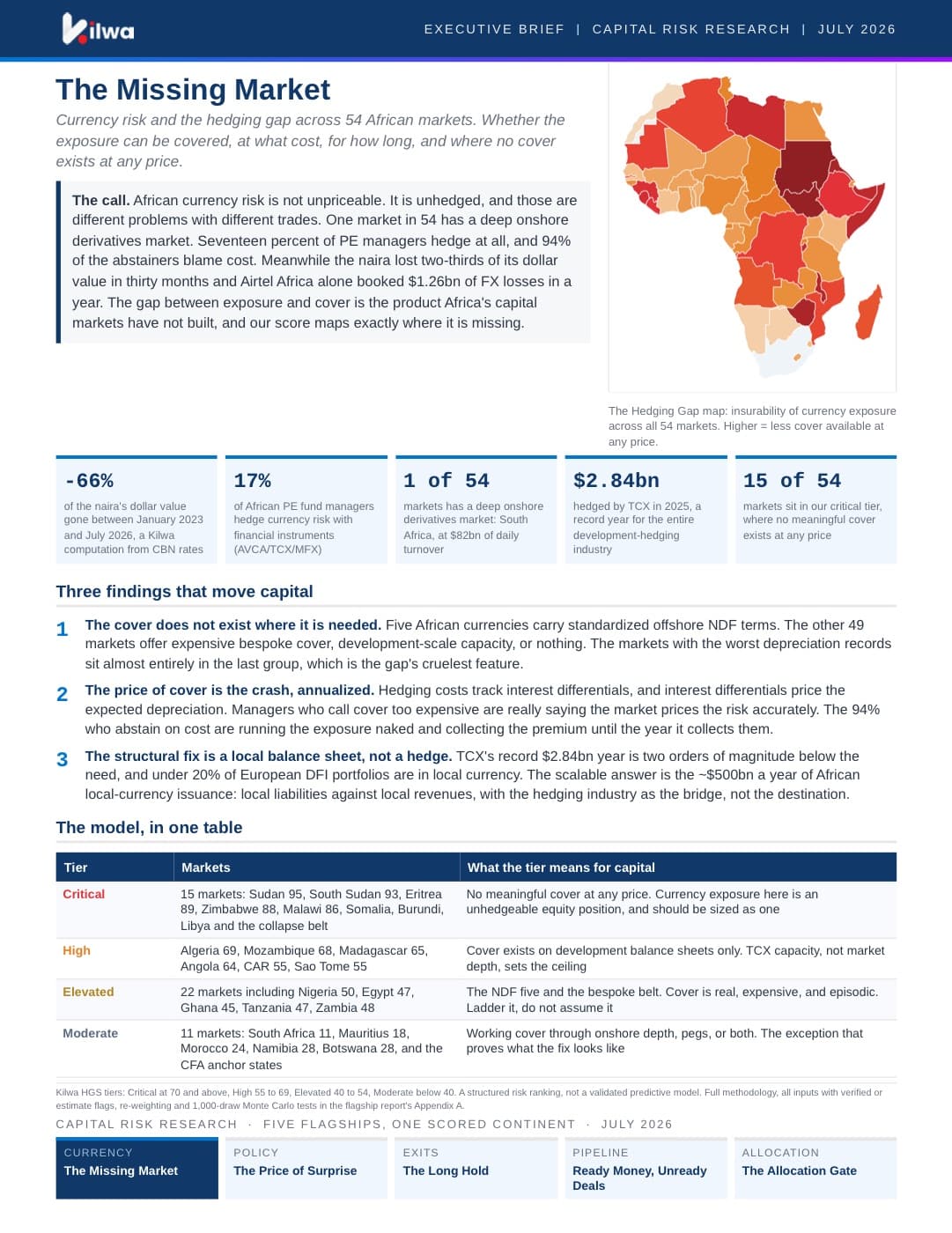
- markets where no FX cover exists at any price
- 54
- markets scored on the same frame, none omitted for thin data
DFI portfolios are multi-country by mandate and long-dated by design. That combination makes stale country data expensive in a way it is not for a single-market investor: the allocation decision compounds across a dozen markets at once, and the correction arrives years later.
The problem
What makes this hard
Country data ages between decisions
Traditional indices refresh on a 6–12 month cycle. Allocation committees meet more often than that, and act on whatever is current.
Local-currency exposure is structural
Under 20% of European DFI portfolios sit in local currency, and the hedging market to fix that does not exist in most markets.
Multi-country risk does not aggregate cleanly
Fifty-four markets with different data quality and different failure modes resist a single risk frame.
With Kilwa
What changes
One scored frame across every market
ISI scores every country and sector on the same 47 indicators, so cross-market comparison is like-for-like.
Hedging gap mapped, market by market
Our Hedging Gap Score identifies the 15 markets where no meaningful currency cover exists at any price.
Decomposition your risk committee can interrogate
SHAP attribution and provenance-flagged inputs, in the form institutional governance requires.
Services for this mandate
How we work with development finance.
Capital allocation & deals
Capital Allocation, Deal & Portfolio Intelligence
Which markets fit the mandate, when to move, and what the exit is worth before you underwrite it.
Read moreRisk & regulatory intelligence
Risk, Resilience & Regulatory Intelligence
What changed this week, whether it touches your exposure, and which action deserves attention.
Read moreSovereign capital & investment promotion
Sovereign Capital & Investment Promotion
How global capital reads your country, where the evidence is weak, and how to close the gap.
Read moreResearch for this mandate
All insights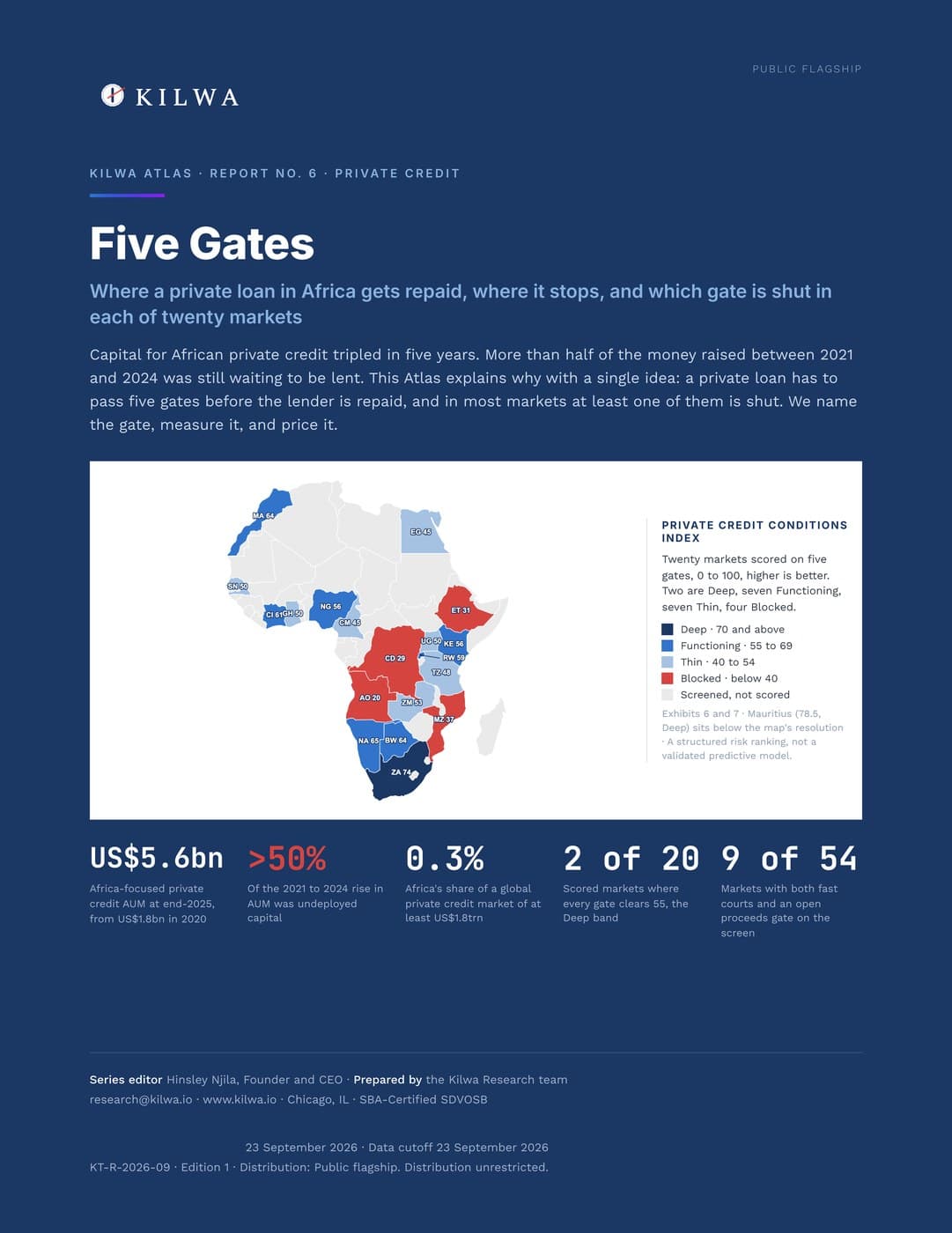

Get started
Built for development finance.
A working session on the markets you follow, with the decomposition behind every score.