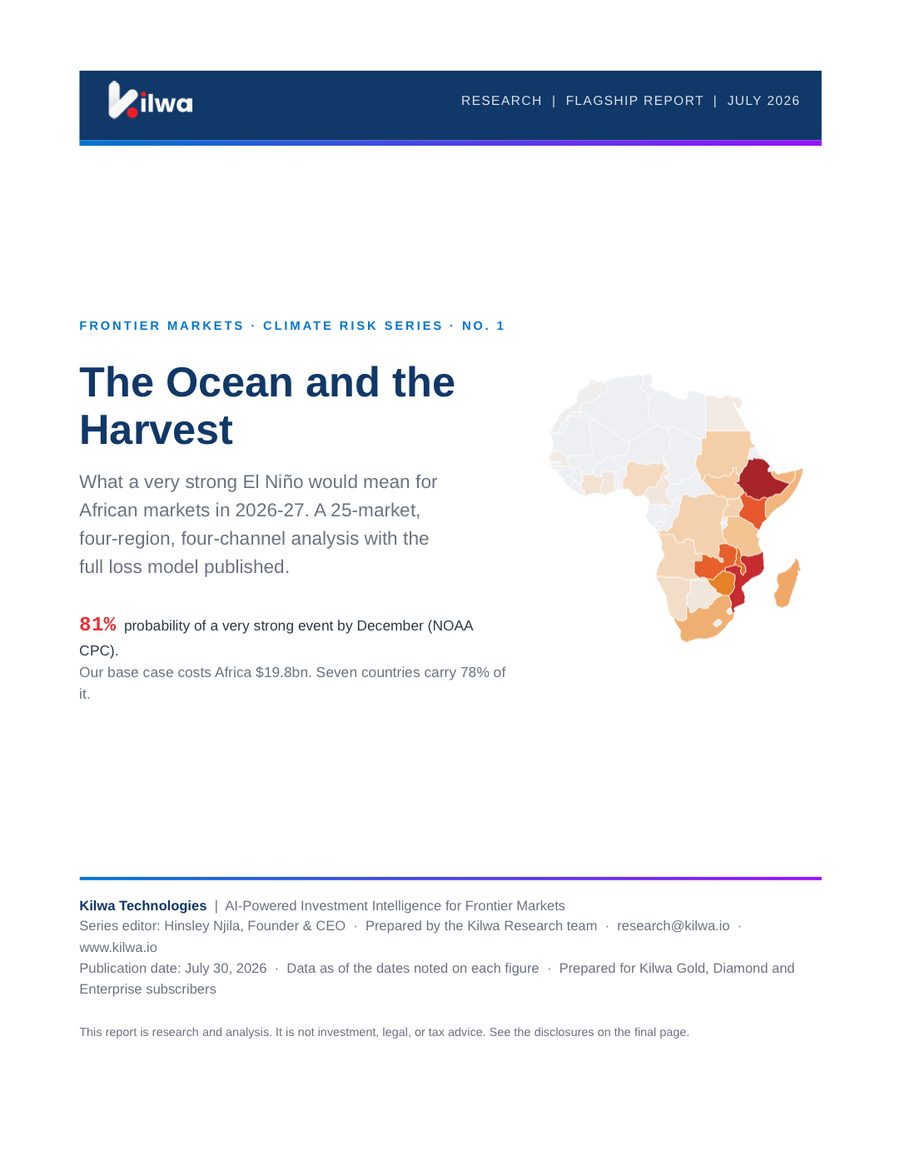
Climate Risk · No. 1
The Ocean and the Harvest
What a very strong El Niño would mean for African markets in 2026–27
A 25-market, four-region, four-channel analysis with the full loss model published.
Series editor Hinsley Njila, Founder & CEO · Prepared by the Kilwa Research team
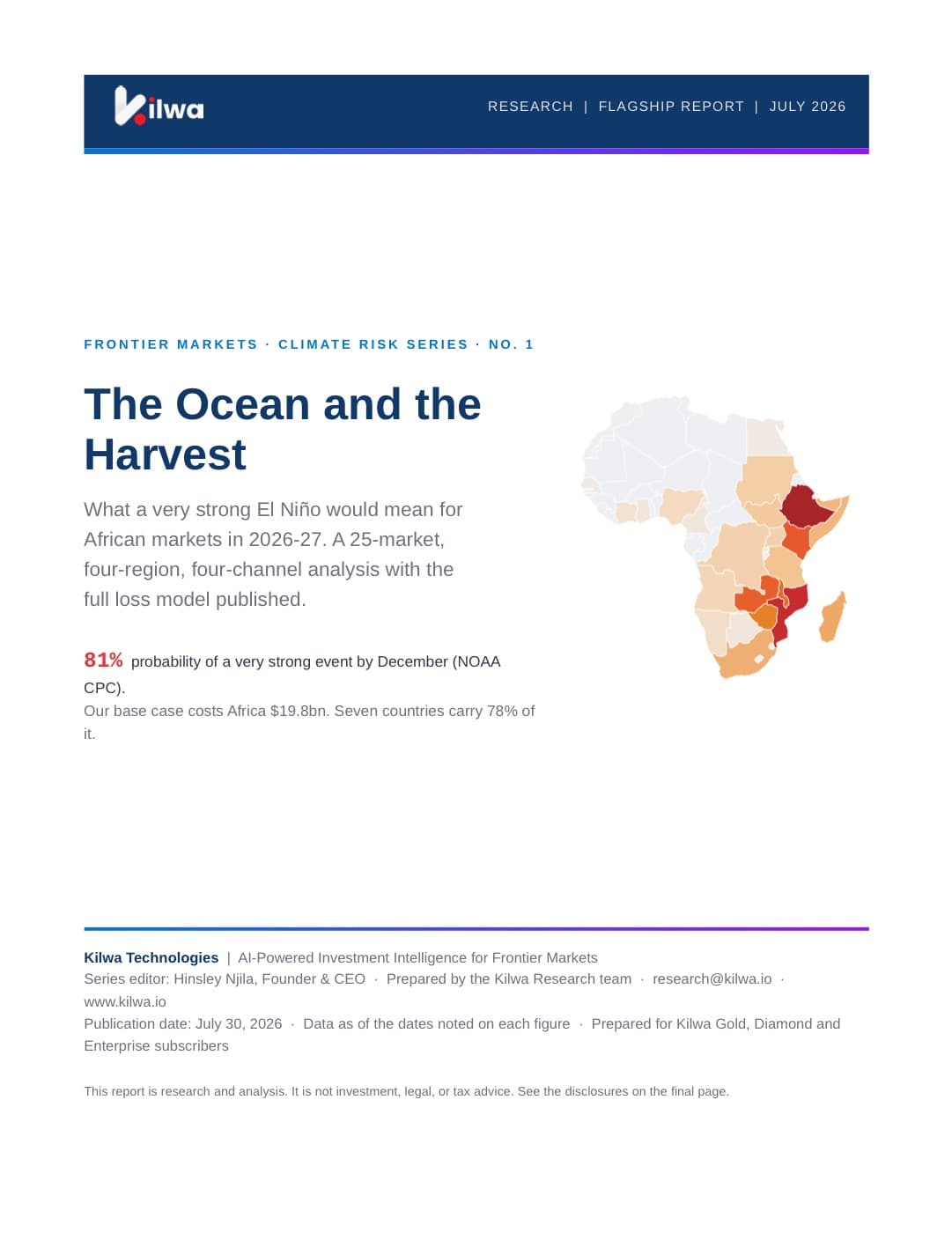
probability of a very strong El Niño event by December (NOAA CPC)
The report, in brief
What it is, who it is for, and what you get.
What a very strong El Niño would mean for 25 African markets in 2026 and 2027, with the loss model published.
Written for
Agribusiness, food and beverage companies
Where harvest losses land, and in which season.
Utilities, power producers and their lenders
Which hydro-dependent grids are exposed.
Sovereign-debt and macro investors
Which balance sheets carry the shock.
Insurers, reinsurers and DFIs
A published loss model to test against your own.
What you get
- A 25-market read across four regions
- Four channels, priced separately
- The loss model, published in full
- 23 pages as a PDF, delivered the moment payment clears
The call
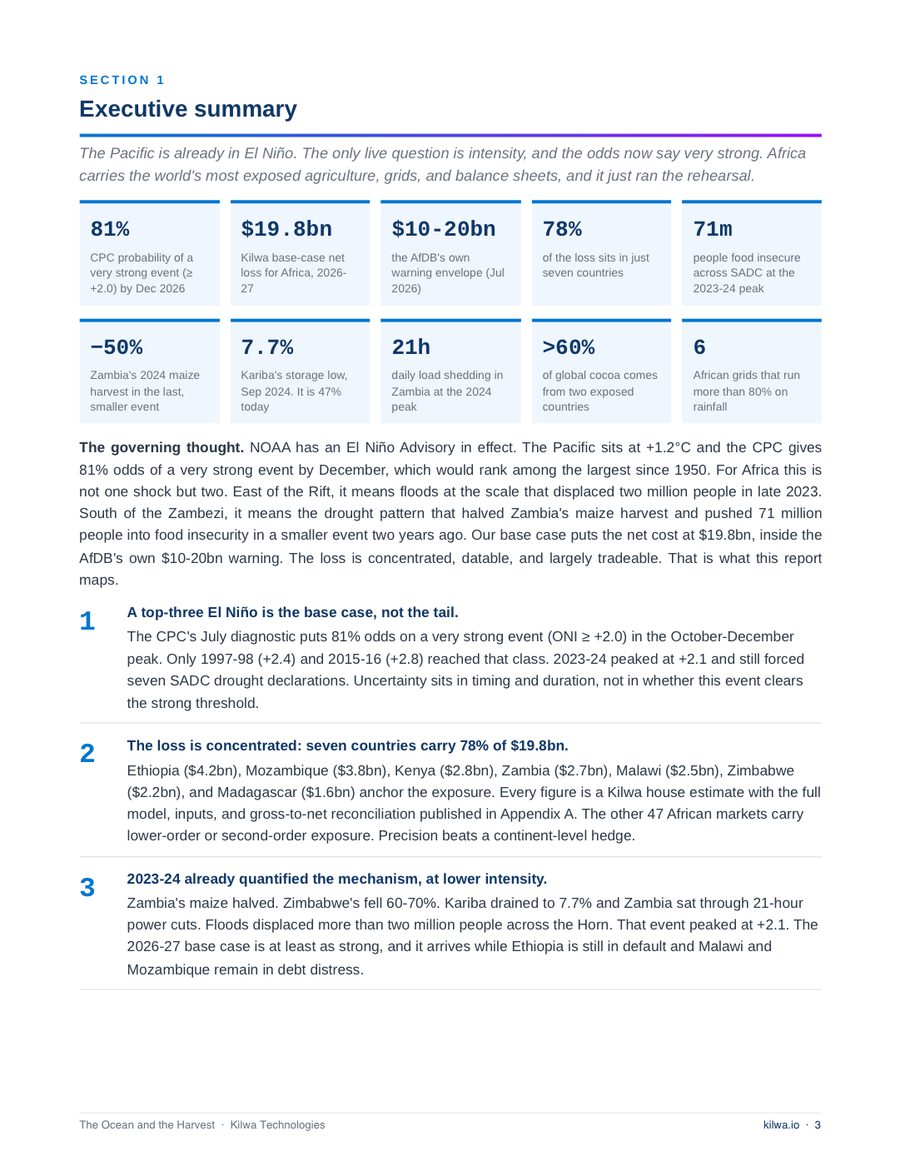
The Pacific is already in El Niño. The only live question is intensity, and the odds now say very strong. Africa carries the world's most exposed agriculture, grids and balance sheets — and it just ran the rehearsal.
The governing thought
NOAA has an El Niño Advisory in effect. The Pacific sits at +1.2°C and the CPC gives 81% odds of a very strong event by December, which would rank among the largest since 1950.
For Africa this is not one shock but two. East of the Rift, it means floods at the scale that displaced two million people in late 2023. South of the Zambezi, it means the drought pattern that halved Zambia's maize harvest and pushed 71 million people into food insecurity in a smaller event two years ago.
Our base case puts the net cost at $19.8bn, inside the AfDB's own $10–20bn warning envelope. The loss is concentrated, datable, and largely tradeable. That is what this report maps.
“The loss is concentrated, datable, and largely tradeable.”
Four channels, priced separately
We model agriculture, hydropower, inflation pass-through and fiscal response as four distinct channels rather than one composite shock, because they hit different parts of a portfolio on different clocks.
Kariba's storage sat at 7.7% in September 2024. It is 47% today — which is the whole argument for treating the grid channel as the one with the shortest fuse.
The numbers
- $19.8bn
- Kilwa base-case net loss for Africa, 2026–27
- 78%
- of the loss sits in just seven countries
- 71m
- people food insecure across SADC at the 2023–24 peak
- −50%
- Zambia's 2024 maize harvest, in a smaller event
- 21h
- daily load shedding in Zambia at the 2024 peak
- 6
- African grids that run more than 80% on rainfall
By market
Markets this report discusses.
Each market page gathers every tier the published reports print for that market, dated and linked to its source.
Series editor: Hinsley Njila, Founder & CEO. Prepared by the Kilwa Research team. research@kilwa.io
This report is research and analysis. It is not investment, legal or tax advice. Kilwa scores are structured risk rankings, not validated predictive models, except where explicitly stated otherwise. It is prepared for general circulation on a published schedule and is not tailored to any recipient.
Conflicts of interest. Kilwa does not hold, trade or take positions in the securities, currencies or instruments of the markets it scores, and receives no compensation from any government, issuer or institution in exchange for a score, a rating or favourable coverage. Where a research programme is funded by a named partner, that funding is disclosed in the report.